

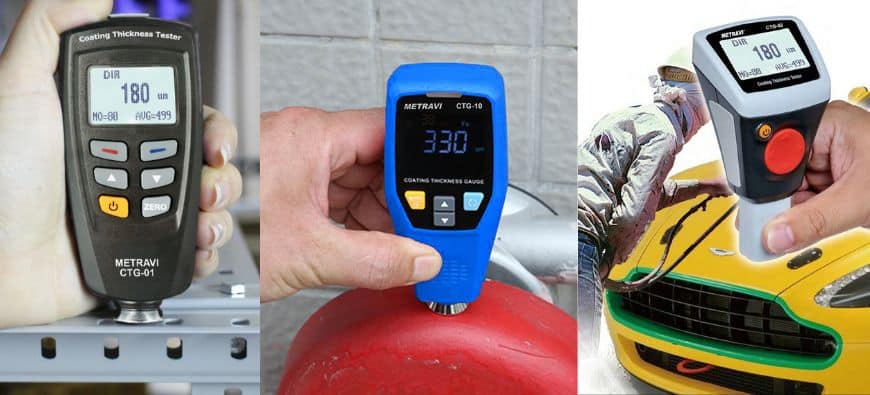
How does a Coating Thickness Gauge work?
A Coating Thickness Gauge is a device used to measure the thickness of coatings applied to various substrates.
A Coating Thickness Gauge works by measuring the thickness of a coating on a substrate, and it employs various principles depending on the type of gauge and the materials involved.
What are the primary methods used by coating thickness gauges?
Magnetic Induction:
- Application: Used for non-magnetic coatings on ferrous (magnetic) substrates, such as paint on steel.
- Principle: The gauge generates a magnetic field. When placed on a coated ferrous substrate, the thickness of the non-magnetic coating affects the magnetic flux, which the gauge measures to determine coating thickness.
- Example: A gauge placed on a painted steel surface to measure paint thickness.
Eddy Current:
- Application: Used for non-conductive coatings on non-ferrous (non-magnetic) substrates, such as anodizing on aluminum.
- Principle: The gauge induces eddy currents in the conductive substrate. The presence and thickness of a non-conductive coating affect the flow of these currents, which the gauge measures to calculate coating thickness.
- Example: A gauge measuring the thickness of an anodized layer on aluminum.
Ultrasonic:
- Application: Suitable for measuring thickness of coatings on various substrates, including non-metallic ones like plastic or wood.
- Principle: The gauge emits ultrasonic pulses that travel through the coating and reflect back from the substrate. The time it takes for the echoes to return is proportional to the coating thickness.
- Example: Measuring the thickness of a protective coating on a wooden surface.
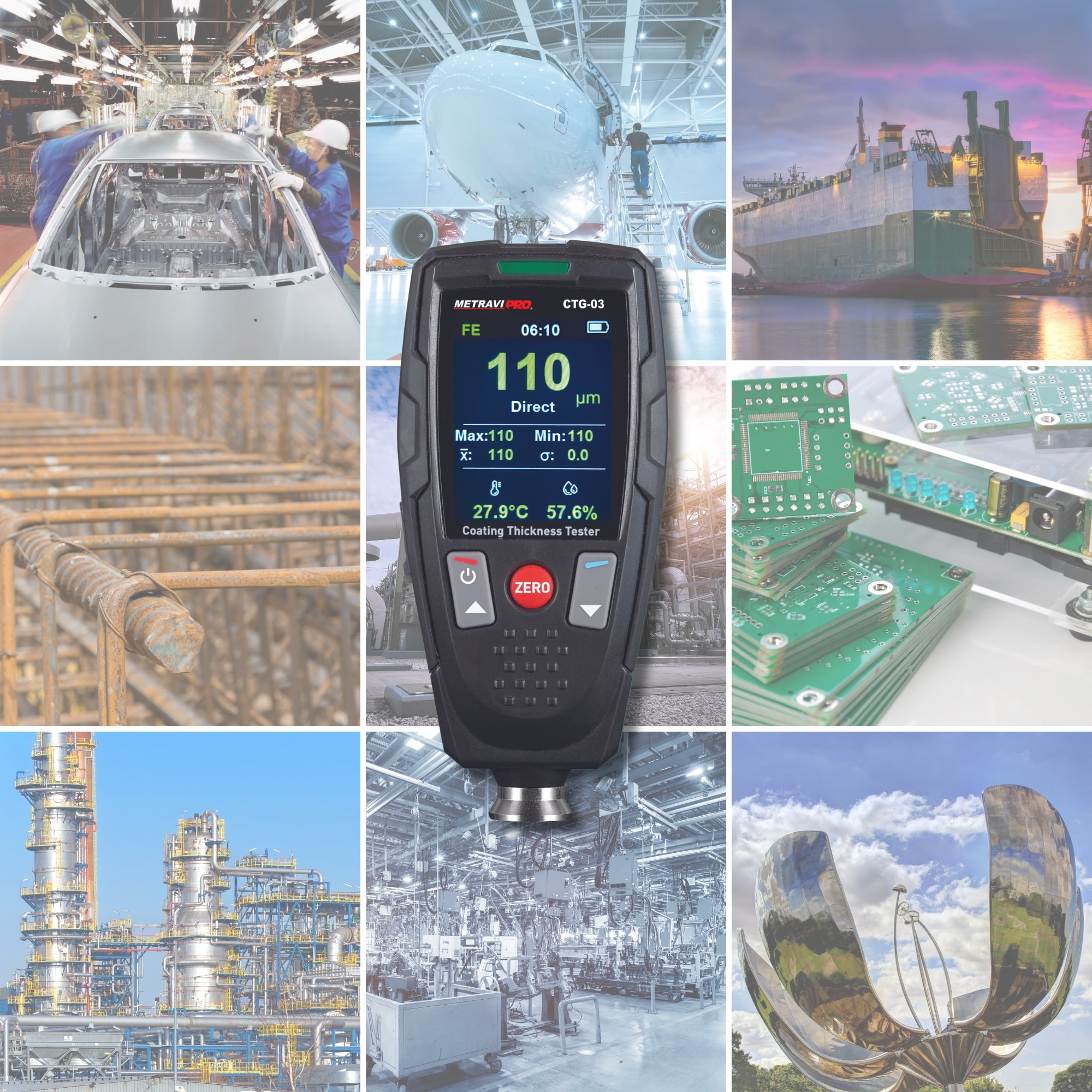
What are the Coating Thickness Gauge applications across numerous industries and scenarios?
Automotive Industry
Quality Control: Ensures that paint and other coatings on vehicles meet specified thickness standards.
Corrosion Protection: Verifies that anti-corrosion coatings on automotive parts are adequate.
Manufacturing and Production
Product Finishing: Ensures uniformity and consistency of coatings on products such as appliances, machinery, and consumer goods.
Adhesion: Confirms that the coating is thick enough to adhere properly without peeling or flaking.
Aerospace Industry
Safety and Performance: Ensures that coatings on aircraft parts meet stringent safety and performance standards, including anti-corrosion and insulation layers.
Weight Management: Helps in maintaining optimal coating thickness to avoid unnecessary weight.
Marine Industry
Hull Protection: Measures the thickness of anti-fouling and anti-corrosion coatings on ships’ hulls to protect against seawater corrosion and marine growth.
Structural Integrity: Ensures the integrity of underwater structures and offshore platforms.
Construction and Infrastructure
Building Materials**: Checks the thickness of coatings on steel beams, rebar, and other construction materials to ensure compliance with safety and durability standards.
Maintenance**: Assists in maintenance by identifying areas where coating may be wearing thin and require reapplication.
Electronics and Electrical Industry
Printed Circuit Boards (PCBs): Ensures proper coating thickness for insulation and protection of electronic components.
Component Coatings: Verifies coatings on various electrical components to prevent oxidation and enhance conductivity.
Oil and Gas Industry
Pipeline Protection**: Measures the thickness of protective coatings on pipelines to prevent corrosion and ensure safe transportation of oil and gas.
Equipment Durability**: Ensures that coatings on drilling equipment and storage tanks are sufficient to withstand harsh environmental conditions.
Research and Development
Material Science: Used in R&D labs to study the properties of different coatings and develop new materials with specific characteristics.
Prototyping: Helps in the development of prototypes by ensuring that coatings are applied correctly and consistently.
Art and Heritage Conservation
Artifact Preservation: Measures the thickness of protective coatings on artworks, sculptures, and historical artifacts to ensure their longevity.
Restoration: Guides the restoration process by providing data on existing coating layers.
Medical Devices
Sterility and Safety: Ensures coatings on medical devices are of the correct thickness to provide necessary sterility and safety features.
Functionality: Verifies the coatings that improve biocompatibility and functionality of medical implants and instruments.
Overall, coating thickness gauges are vital tools for quality control, safety assurance, maintenance, and research across a wide array of industries.
How to use a Coating Thickness Gauge?
Steps to use a Coating Thickness Gauge
- Calibration:
- Purpose: Ensures accuracy by setting the gauge against known standards or calibration blocks.
- Process: Calibrate the device according user manual instructions using samples of known thickness.
- Measurement:
- Contact: Place the probe or sensor of the gauge on the coated surface.
- Readout: The gauge measures the coating thickness using one of the methods described above and displays the result on a digital or analog readout.
- Data Analysis:
- Interpretation: Use the measurements to assess the quality, uniformity, and adequacy of the coating.
- Documentation: Record the data for quality control, compliance, or maintenance purposes.
Metravi offers a wide range of reliable Coating Thickness Gauges:

CTG-01 Coating Thickness Gauge with USB Interface
Coating Thickness Gauge with single probe for coating measurements, for both ferrous and non-ferrous metal substrates. Self calibratable and with USB Interface for PC analysis software. Measures up to 1250µm.
.

CTG-02 Coating Thickness Gauge with Extendable Probe
Coating Thickness Gauge with single extendable probe for coating measurements, for both ferrous and non-ferrous metal substrates. Self calibratable, Data Logging for up to 2000 data, with USB Interface for PC analysis software. Measures up to 2000µm.
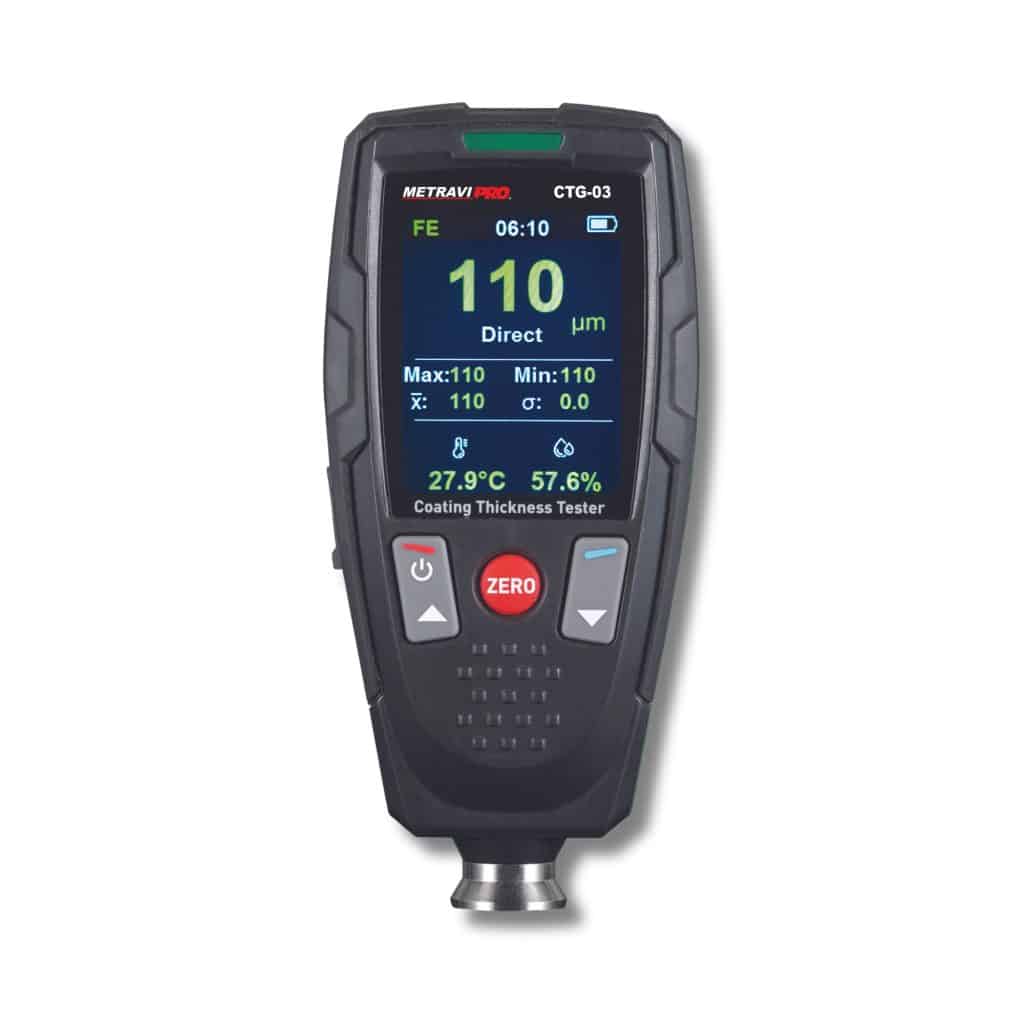
PRO CTG-03 Coating Thickness Gauge with USB Interface
Coating Thickness Gauge with USB Interface. Single probe for coating measurements for both ferrous and non-ferrous metal substrates. Full colour, auto-rotation TFT screen. Self calibratable. Measures upto 2000μm. Also measure Temperature, Humidity & Dew Point temperature. Data logging 50 sets. USB interface for PC analysis software.
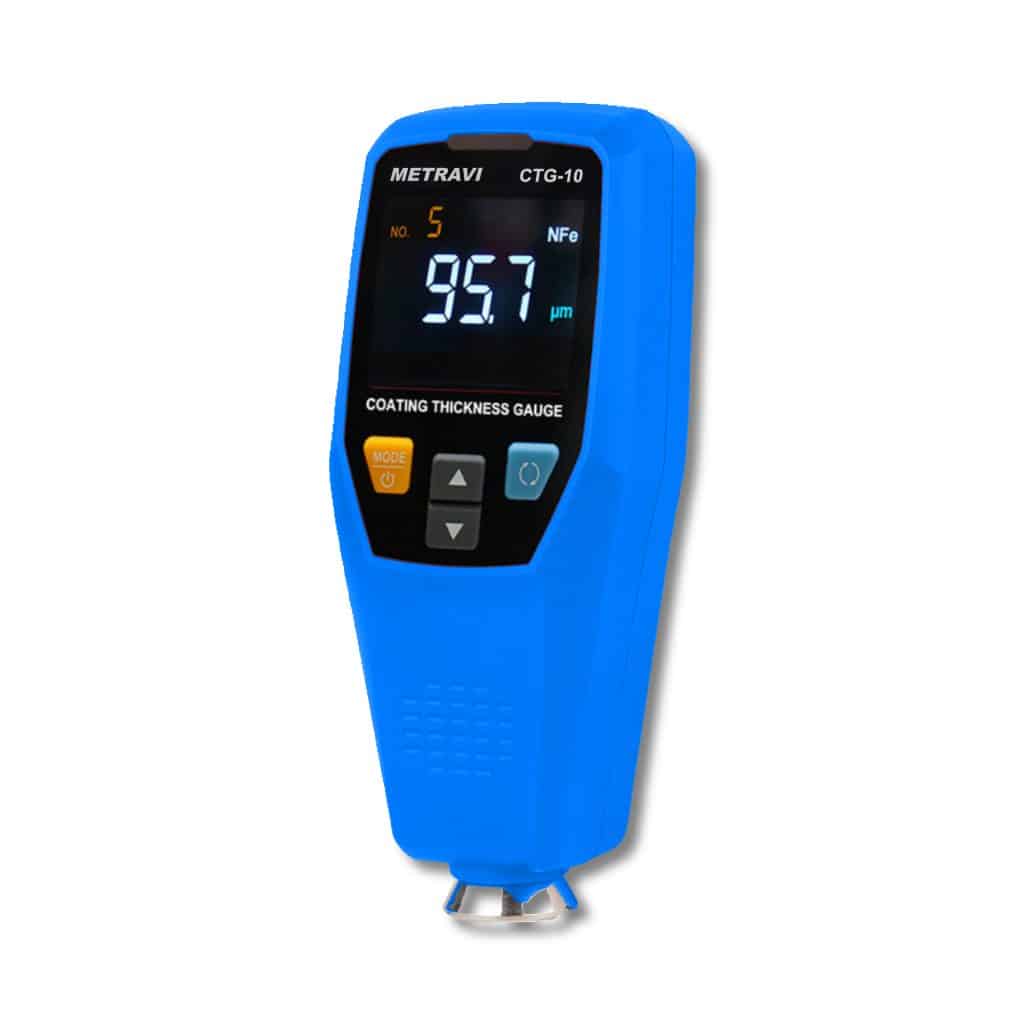
CTG-10 Coating Thickness Gauge
Coating Thickness Gauge with single probe for both ferrous and non-ferrous metal substrates. Colour light alarms and rotatable screen. Data Logging for 199 groups of data. Self calibratable. Measures upto 1750μm.



Leave a Reply
You must be logged in to post a comment.